Thursday, 14 March 2013

[X528.Ebook] Get Free Ebook Zero Sugar Diet: The 14-Day Plan to Flatten Your Belly, Crush Cravings, and Help Keep You Lean for Life, by David Zinczenko, Stephen Perri

Get Free Ebook Zero Sugar Diet: The 14-Day Plan to Flatten Your Belly, Crush Cravings, and Help Keep You Lean for Life, by David Zinczenko, Stephen Perri

Zero Sugar Diet: The 14-Day Plan To Flatten Your Belly, Crush Cravings, And Help Keep You Lean For Life, By David Zinczenko, Stephen Perri How can you transform your mind to be more open? There many sources that can assist you to improve your thoughts. It can be from the other experiences as well as tale from some individuals. Reserve Zero Sugar Diet: The 14-Day Plan To Flatten Your Belly, Crush Cravings, And Help Keep You Lean For Life, By David Zinczenko, Stephen Perri is among the trusted resources to get. You can locate many publications that we share below in this internet site. As well as now, we reveal you among the most effective, the Zero Sugar Diet: The 14-Day Plan To Flatten Your Belly, Crush Cravings, And Help Keep You Lean For Life, By David Zinczenko, Stephen Perri
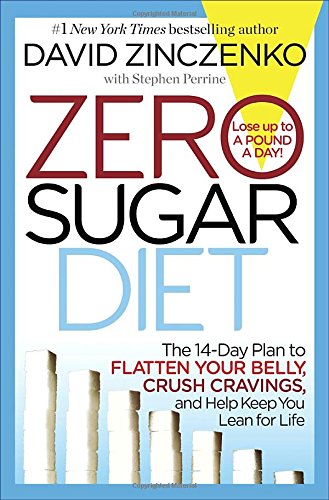
Zero Sugar Diet: The 14-Day Plan to Flatten Your Belly, Crush Cravings, and Help Keep You Lean for Life, by David Zinczenko, Stephen Perri

Zero Sugar Diet: The 14-Day Plan to Flatten Your Belly, Crush Cravings, and Help Keep You Lean for Life, by David Zinczenko, Stephen Perri


Zero Sugar Diet: The 14-Day Plan to Flatten Your Belly, Crush Cravings, and Help Keep You Lean for Life, by David Zinczenko, Stephen Perri

Get Free Ebook Zero Sugar Diet: The 14-Day Plan to Flatten Your Belly, Crush Cravings, and Help Keep You Lean for Life, by David Zinczenko, Stephen Perri

Superb Zero Sugar Diet: The 14-Day Plan To Flatten Your Belly, Crush Cravings, And Help Keep You Lean For Life, By David Zinczenko, Stephen Perri publication is consistently being the very best close friend for spending little time in your workplace, night time, bus, and also almost everywhere. It will be a great way to merely look, open, and review the book Zero Sugar Diet: The 14-Day Plan To Flatten Your Belly, Crush Cravings, And Help Keep You Lean For Life, By David Zinczenko, Stephen Perri while in that time. As recognized, encounter and also ability do not always come with the much money to get them. Reading this book with the title Zero Sugar Diet: The 14-Day Plan To Flatten Your Belly, Crush Cravings, And Help Keep You Lean For Life, By David Zinczenko, Stephen Perri will certainly let you know much more things.

If you ally require such a referred Zero Sugar Diet: The 14-Day Plan To Flatten Your Belly, Crush Cravings, And Help Keep You Lean For Life, By David Zinczenko, Stephen Perri book that will certainly give you worth, get the best seller from us currently from numerous preferred authors. If you intend to amusing books, several books, story, jokes, and more fictions compilations are additionally launched, from best seller to the most recent released. You could not be perplexed to enjoy all book collections Zero Sugar Diet: The 14-Day Plan To Flatten Your Belly, Crush Cravings, And Help Keep You Lean For Life, By David Zinczenko, Stephen Perri that we will provide. It is not regarding the prices. It has to do with what you require currently. This Zero Sugar Diet: The 14-Day Plan To Flatten Your Belly, Crush Cravings, And Help Keep You Lean For Life, By David Zinczenko, Stephen Perri, as one of the most effective sellers below will certainly be among the best selections to check out.

Discovering the appropriate Zero Sugar Diet: The 14-Day Plan To Flatten Your Belly, Crush Cravings, And Help Keep You Lean For Life, By David Zinczenko, Stephen Perri book as the appropriate necessity is kind of good lucks to have. To start your day or to finish your day in the evening, this Zero Sugar Diet: The 14-Day Plan To Flatten Your Belly, Crush Cravings, And Help Keep You Lean For Life, By David Zinczenko, Stephen Perri will certainly appertain enough. You could just search for the ceramic tile here and you will certainly get guide Zero Sugar Diet: The 14-Day Plan To Flatten Your Belly, Crush Cravings, And Help Keep You Lean For Life, By David Zinczenko, Stephen Perri referred. It will certainly not bother you to cut your useful time to go with purchasing publication in store. In this way, you will also invest money to pay for transport and also other time spent.

By downloading the on-line Zero Sugar Diet: The 14-Day Plan To Flatten Your Belly, Crush Cravings, And Help Keep You Lean For Life, By David Zinczenko, Stephen Perri book here, you will certainly obtain some advantages not to go with the book establishment. Just connect to the web as well as start to download the web page link we share. Currently, your Zero Sugar Diet: The 14-Day Plan To Flatten Your Belly, Crush Cravings, And Help Keep You Lean For Life, By David Zinczenko, Stephen Perri is ready to take pleasure in reading. This is your time and your serenity to acquire all that you desire from this publication Zero Sugar Diet: The 14-Day Plan To Flatten Your Belly, Crush Cravings, And Help Keep You Lean For Life, By David Zinczenko, Stephen Perri

Zero Sugar Diet: The 14-Day Plan to Flatten Your Belly, Crush Cravings, and Help Keep You Lean for Life, by David Zinczenko, Stephen Perri

NEW YORK TIMES BESTSELLER • Lose up to a pound a day and curb your craving for sweets with delicious recipes and simple, science-based food swaps from David Zinczenko, Good Morning America’s health and wellness editor and bestselling author of�Zero Belly Diet, Zero Belly Smoothies, and Eat This, Not That!

With Zero Sugar Diet, #1 New York Times bestselling author David Zinczenko continues his twenty-year mission to help Americans live their happiest and healthiest lives, uncovering revolutionary new research that explains why you can’t lose weight—and shows that it’s not your fault! The true culprit is sugar—specifically added sugars—which food manufacturers sneak into almost everything we eat, from bread to cold cuts to yogurt, peanut butter, pizza, and even “health” foods.

Until now, there’s been no way to tell how much added sugar you’re eating—or how to avoid it without sacrifice. But with the simple steps in Zero Sugar Diet, you’ll be able to eat all your favorite foods and strip away unnecessary sugars—losing weight at a rate of up to one pound per day, while still enjoying the sweeter things in life.

By replacing empty calories with essential ones—swapping in whole foods and fiber and swapping out added sugars—you’ll conquer your cravings and prevent the blood sugar surge that leads to some of the worst health scourges in America today, including abdominal fat, diabetes, heart disease, cancer, liver disease, fatigue, and tooth decay.

And all it takes is 14 days. You’ll be stunned by the reported results:

Lisa Gardner, 49, lost 10 pounds
Tara Anderson, 42, lost 10 pounds
David Menkhaus, 62, lost 15 pounds
Ricky Casados, 56, lost 12 pounds

You, too, can melt away belly fat, boost your energy levels and metabolism, and take control of your health and your life, armed with a comprehensive grocery list of fresh produce, proteins, whole grains, and even prepared meals, accompanied by two weeks’ worth of fiber-rich breakfast, lunch, dinner, and snack recipes and real-life results from successful Zero Sugar dieters. The fat-burning formula for long-term weight loss and optimal health is at your fingertips. Join in the crusade and say goodbye to added sugars—and goodbye to your belly—with Zero Sugar Diet!

Praise for Zero Sugar Diet

“Zero Sugar Diet targets an easily identifiable enemy, comparing excess sugar in our diet to a deadly virus. . . . Well, that got my attention.”—The New York Times Book Review

“A user-friendly guide [that provides] a wealth of helpful information and tools for those wishing to limit added sugars in their diet.”—Library Journal

“This plan is informative and entertaining (e.g., a chart converts common meals to their equivalent in donuts; ‘an open letter from your pancreas’) and will help readers rein in cravings and become savvy monitors of added sugar consumption.”—Publishers Weekly

  • Sales Rank: #343 in Books
  • Brand: Ballantine Books
  • Published on: 2016-12-27
  • Released on: 2016-12-27
  • Original language: English
  • Number of items: 1
  • Dimensions: 9.60" h x 1.10" w x 6.50" l, 1.00 pounds
  • Binding: Hardcover
  • 304 pages
Features
  • Zero Sugar Diet: The 14-Day Plan to Flatten Your Belly, Crush Cravings...

Review
“Zero Sugar Diet targets an easily identifiable enemy, comparing excess sugar in our diet to a deadly virus. . . . Well, that got my attention.”—The New York Times Book Review

“A user-friendly guide [that provides] a wealth of helpful information and tools for those wishing to limit added sugars in their diet.”—Library Journal

“This plan is informative and entertaining (e.g., a chart converts common meals to their equivalent in donuts; ‘an open letter from your pancreas’) and will help readers rein in cravings and become savvy monitors of added sugar consumption.”—Publishers Weekly

About the Author
David Zinczenko is the #1 New York Times bestselling author of Zero Belly Diet, Zero Belly Cookbook, and Zero Belly Smoothies and�the co-author of the Eat This, Not That! franchise (which has sold more than eight million copies worldwide) and the Abs Diet books. Currently the editorial director of�Men’s Fitness, he is the award-winning former editor in chief of Men’s Health and editorial director of�Women’s Health, Prevention, and Best Life magazines. Zinczenko is also the nutrition and wellness editor at ABC News and and the CEO of the media company Galvanized. He lives in New York City.

Stephen Perrine�is also the author of�The Men’s Health Diet�and�The New American Diet. The�former publisher of Rodale Books and editor in chief of�Best Life, he has edited and published dozens of New York Times bestsellers and has appeared as an expert on health and nutrition on The Dr. Oz Show, Today, Good Morning America, and numerous other television shows. He lives with his family in New York City.

Excerpt. � Reprinted by permission. All rights reserved.
chapter  1

Strip Away Sugar, Strip Away Trouble

Fourteen days.

That’s all it will take to change your body. So, it’s no wonder that when I announced a test program for The Sugar Swap Diet, more than eleven hundred signed up in twenty-�four hours. As soon as the word went out among the five million people who visit EatThis.com every month, we began hearing from fans who were trying to control their sugar addictions but struggling each and every day.

Our test panelists not only lived The Sugar Swap Diet, but they documented—on a day-by-day basis—the remarkable changes that happened within their own bodies. Energy levels soared. Waistlines shrank. Blood pressure and cholesterol numbers plummeted. Muscles became toned and lean.

This unique day-by-day approach will help to keep you motivated as you compare yourself with, and even exceed, the success of the test panelists, many of whom struggled with real sugar addictions. When you reduce your sugar intake using this program, while slowing its impact on your body, a number of amazing things will happen, with shocking rapidity:

1. You’ll Start Burning Fat

Immediately. Reducing your intake of calorie-dense sugar carbs automatically reduces the amount of calories you’re consuming on a daily basis, which forces your body to burn fat stored around your midsection for energy, rather than the sugars it takes from carbohydrates.

2. You’ll Feel Less Hungry

As your body detects that you’ve started to lose weight, your hunger hormones get furious. They start firing off signals to your brain telling you that winter’s approaching, the barbarian hordes are at the gate, and you’d better consume every calorie in sight in order to prepare for the famine ahead.

This plan uses the power of fiber to counteract that basic instinct. By slowing the progress of carbohydrates through your body, fiber helps give you a continuous, steady dose of energy, so you never get the “I’m empty” signal. Oh, you’ll eat plenty of food, but not because you’re ravenous. Because it tastes so good!

3. Your Belly Will Get Flatter

One of the first things you notice when you replace simple carbs with high-fiber foods is that your belly begins to flatten out—literally within days. The reason: Most Americans only take in 15 of the recommended 25 to 38 grams per day, according to the Institute of Medicine. As a result, the healthy gut microbes that keep us lean have less to munch on, and the unhealthy microbes—which feast on sugar—take over. Those are the little buggers that cause bloating and make your belly look bigger than it actually is. In fact, an increase in the “bad” belly biome bacteria—a family called Firmicutes—is one of the most noticeable differences between Americans in the lean 1980s and those in the fat 2000s. I’ll show you how this plan changes the way your gut acts and feels, and why fourteen days is all it takes to shrink your waist size by as much as seven inches.

4. You’ll Slash Your Risk of Diabetes

Eating too many simple sugars can wreak havoc in your body in both the short and long term. The more of these quickly digested carbs you consume, the more insulin your pancreas produces, eventually leading to insulin resistance and possibly type 2 diabetes.

5. Your Muscles Will Get Stronger

In one of the most stunning studies of recent years, scientists have linked refined sugar to a condition called sarcopenia—basically, age-related loss of muscle mass. It happens because added sugar actually blocks the body’s ability to synthesize protein into muscle. (Spending big bucks on protein supplements? If they have added �sugar, they’re probably hurting, not enhancing, your ability to build lean muscle.) By reducing the impact of sugar, this plan will keep your muscles younger and stronger—protecting you from injury and helping you to burn fat faster and more efficiently.

6. You’ll Feel More Energized

By slowing your body’s absorption of carbohydrates, you’ll keep your body and your brain more fully fueled all the time, beating both general physical fatigue and the brain fog that can often accompany it. You’ll no longer need to make poor food choices as a way of getting quick energy, and you won’t be dragging through those afternoon hours.

Raising (Sugar) Cain

You can see why I had to write this book.

In fact, for the past two decades, I have been investigating the secrets of the food industry. And I’ve gotten tired of marketers trying to blame us, the American people, for the obesity crisis. In 2002, I published a controversial New York Times op-ed in defense of a group of kids who were suing McDonald’s for making them fat.

A lot of people thought I was nuts: Suing McDonald’s for making you fat is like suing Porsche for making you get a speeding ticket. But at least that Porsche comes with a speedometer. Fifteen years ago the idea of there being calorie counts and nutrition information for restaurant food was unheard of. There was absolutely no way of knowing how many calories were in that Big Mac. And, as I pointed out, if you drive down any highway in America, it’s a lot easier to find a set of golden arches than it is a place to buy a grapefruit.

That op-ed was the opening salvo in what has become a career-long crusade. When I wrote The Abs Diet in 2004, I dedicated it to “every American who has taken up arms in the battle against obesity.” I explained why counting calories while you diet and exercise wasn’t the way to lose weight: Simply put, it takes far too long to burn off 300 calories, and no time at all to eat them back up. Instead, I focused on quality nutrition and the importance of boosting metabolism—long before “boost your metabolism” became a catchphrase.

But it wasn’t until I launched Eat This, Not That! in 2007 that real change began to happen. The first of nearly twenty books in the Eat This, Not That! franchise said it all in the dedication, when my co-�author Matt Goulding and I called out Applebee’s, Olive Garden, Outback, Red Lobster, and T.G.I. Friday’s for concealing their nutritional information. (Today, each and every one provides full nutritional data for all their offerings.)

At first, food manufacturers hated me. But soon, they began to change their tune. When we ran a blog in 2008 exposing Baskin-�Robbins for producing a 2,310-calorie Heath Bar milkshake, the company followed up by scrapping the drink, as well as its entire line of “premium” shakes. Jamba Juice unveiled a line of high-fructose corn syrup–free drinks in 2009, and CEO James White cited Eat This, Not That! as the inspiration for the move. A few months later, Gatorade and Hunt’s took steps to reduce HFCS and, by the end of that year, HFCS consumption in the United States began to drop for the first time in thirty years.

Few movements have changed the way we eat more than Eat This, Not That! From the world of nutritional mystery I first wrote about in 2002, we emerged in 2015 to a new day, when the FDA at last required calorie counts to be displayed in all chain restaurants and �movie �theaters—long after most restaurants, under pressure from ticked-off consumers, had already made the move voluntarily.

But knowing what you’re eating is only part of the battle. How and when to eat is also important. I wrote The 8-Hour Diet in 2012 in response to shocking new research about longevity and how the timing of our meals could dramatically extend our lives, flatten our bellies, and reduce our risk of diabetes. And in 2013, I began tracking breakthrough research emerging out of Europe about nutrigenics—the study of how our genes interact with our food in ways that determine whether or not our fat genes get triggered.

The book that resulted from that research, Zero Belly Diet, became one of the biggest books of 2015, and it solved for me one of the great personal mysteries of my life—why my brother Eric was a star athlete in high school, while I was a flailing firkin of flab. It turns out that, like Eric and me, most of us carry the fat genes, but it’s only when we eat too much of the wrong food, and too little of the right food, that those genes wake up and cause us to begin storing more fat than we want to. His healthy eating habits didn’t trigger his obesity storage genes; my diet of Cheetos and Cheez Whiz did.

But Zero Belly Diet opened my eyes to new science that demanded further exploration. One of those breaking areas of research was the role that fiber had in feeding our gut biomes—the complex systems of bacteria that live in our digestive organs and do much more than just break down food. They play an essential role in managing our hormones, our energy levels, and even our immune systems. A balanced gut means physical and emotional health, as well as a properly calibrated sequence of genes that are firing the way nature intended. Feed the good bacteria, and you lose weight. Feed the bad, and you gain.

And guess what the bad bacteria love to eat? Sugar.

Most helpful customer reviews

316 of 322 people found the following review helpful.
Life changing
By Steve McGowan
I was a test panelist for this book before it came out and lost a pound a day for the first two weeks. The premise that that added sugars—not all sugars—are making us fat. It's got new research about how companies are making you fat by hiding in in your foods (even spaghetti sauce and salads), and then gives you recipes and more than 500 foods to eat instead, leading to rapid weight loss. I signed up because my doctor said I was at risk of diabetes. My wife and I ended up losing 15 pounds. I stayed on the plan and kept losing weight, which became easier as my brain got rewired and didn't crave sugar anymore. It's amazing what happens when you know how to target the one darn thing making you fat.

203 of 217 people found the following review helpful.
Worth Every Penny for Rapid Weight Loss
By CharlesLane
I saw Dave Zinczenko on Good Morning America and had to buy this book after seeing that there's a whole doughnut's worth of sugar in my store-bought spaghetti sauce! Glad I did. Here's what you're getting: The first few chapters explain how food manufacturers are making us fat, and about how the author helped a ton of people lose weight by eliminating their added sugars. Then we get to the diet itself, which seems purposefully manageable and not too restrictive (three meals and one snack a day for the first 14 days; then there's a maintenance program).

The recipes are completely added-sugar-free, and there's a guide with 500+ products that are sugar-free. I contacted one of the test panelists on Facebook and she said it really worked; she lost 10 pounds and doesn't crave sweets as much. I think anything that helps Americans free themselves from sugar is good, and weight loss inevitable.

13 of 13 people found the following review helpful.
READ IT, TRY IT, IT WORKS!
By tommyv
This book is GREAT! I am following the program and I absolutely see the difference. feel better, have lost about 8 lbs. so far and have altered the way I shop for food and how I plan and cook my meals. This book helps you to know the proper way to control added sugar and eat more healthy meals. It is really NOT a diet, it is a new way to select healthy food instead if sugar laden processed food. READ IT, TRY IT, IT WORKS!

See all 206 customer reviews...

Zero Sugar Diet: The 14-Day Plan to Flatten Your Belly, Crush Cravings, and Help Keep You Lean for Life, by David Zinczenko, Stephen Perri PDF
Zero Sugar Diet: The 14-Day Plan to Flatten Your Belly, Crush Cravings, and Help Keep You Lean for Life, by David Zinczenko, Stephen Perri EPub
Zero Sugar Diet: The 14-Day Plan to Flatten Your Belly, Crush Cravings, and Help Keep You Lean for Life, by David Zinczenko, Stephen Perri Doc
Zero Sugar Diet: The 14-Day Plan to Flatten Your Belly, Crush Cravings, and Help Keep You Lean for Life, by David Zinczenko, Stephen Perri iBooks
Zero Sugar Diet: The 14-Day Plan to Flatten Your Belly, Crush Cravings, and Help Keep You Lean for Life, by David Zinczenko, Stephen Perri rtf
Zero Sugar Diet: The 14-Day Plan to Flatten Your Belly, Crush Cravings, and Help Keep You Lean for Life, by David Zinczenko, Stephen Perri Mobipocket
Zero Sugar Diet: The 14-Day Plan to Flatten Your Belly, Crush Cravings, and Help Keep You Lean for Life, by David Zinczenko, Stephen Perri Kindle

Zero Sugar Diet: The 14-Day Plan to Flatten Your Belly, Crush Cravings, and Help Keep You Lean for Life, by David Zinczenko, Stephen Perri PDF

Zero Sugar Diet: The 14-Day Plan to Flatten Your Belly, Crush Cravings, and Help Keep You Lean for Life, by David Zinczenko, Stephen Perri PDF

Zero Sugar Diet: The 14-Day Plan to Flatten Your Belly, Crush Cravings, and Help Keep You Lean for Life, by David Zinczenko, Stephen Perri PDF

Tuesday, 12 March 2013

[G557.Ebook] Download PDF A Web-Based Introduction to Programming: Essential Algorithms, Syntax, and Control Structures Using PHP, HTML, and MySQL, Third Edition

Download PDF A Web-Based Introduction to Programming: Essential Algorithms, Syntax, and Control Structures Using PHP, HTML, and MySQL, Third Edition

Since publication A Web-Based Introduction To Programming: Essential Algorithms, Syntax, And Control Structures Using PHP, HTML, And MySQL, Third Edition has great advantages to read, lots of individuals now expand to have reading routine. Assisted by the industrialized innovation, nowadays, it is uncomplicated to download guide A Web-Based Introduction To Programming: Essential Algorithms, Syntax, And Control Structures Using PHP, HTML, And MySQL, Third Edition Even guide is not alreadied existing yet in the marketplace, you to look for in this site. As what you can discover of this A Web-Based Introduction To Programming: Essential Algorithms, Syntax, And Control Structures Using PHP, HTML, And MySQL, Third Edition It will actually relieve you to be the very first one reading this e-book A Web-Based Introduction To Programming: Essential Algorithms, Syntax, And Control Structures Using PHP, HTML, And MySQL, Third Edition and also get the benefits.

A Web-Based Introduction to Programming: Essential Algorithms, Syntax, and Control Structures Using PHP, HTML, and MySQL, Third Edition

A Web-Based Introduction to Programming: Essential Algorithms, Syntax, and Control Structures Using PHP, HTML, and MySQL, Third Edition


A Web-Based Introduction to Programming: Essential Algorithms, Syntax, and Control Structures Using PHP, HTML, and MySQL, Third Edition

Download PDF A Web-Based Introduction to Programming: Essential Algorithms, Syntax, and Control Structures Using PHP, HTML, and MySQL, Third Edition

A Web-Based Introduction To Programming: Essential Algorithms, Syntax, And Control Structures Using PHP, HTML, And MySQL, Third Edition. Adjustment your routine to hang or lose the moment to only talk with your good friends. It is done by your everyday, don't you feel burnt out? Now, we will show you the brand-new routine that, actually it's an older practice to do that could make your life much more qualified. When feeling burnt out of always chatting with your close friends all spare time, you can locate the book qualify A Web-Based Introduction To Programming: Essential Algorithms, Syntax, And Control Structures Using PHP, HTML, And MySQL, Third Edition and then read it.

Getting the e-books A Web-Based Introduction To Programming: Essential Algorithms, Syntax, And Control Structures Using PHP, HTML, And MySQL, Third Edition now is not sort of tough method. You can not only going with publication shop or collection or loaning from your close friends to review them. This is a quite easy way to precisely get the book by on-line. This on-line book A Web-Based Introduction To Programming: Essential Algorithms, Syntax, And Control Structures Using PHP, HTML, And MySQL, Third Edition could be among the alternatives to accompany you when having spare time. It will certainly not squander your time. Think me, guide will certainly reveal you brand-new thing to check out. Merely spend little time to open this on the internet e-book A Web-Based Introduction To Programming: Essential Algorithms, Syntax, And Control Structures Using PHP, HTML, And MySQL, Third Edition and read them any place you are now.

Sooner you get guide A Web-Based Introduction To Programming: Essential Algorithms, Syntax, And Control Structures Using PHP, HTML, And MySQL, Third Edition, quicker you could enjoy reviewing the book. It will be your turn to maintain downloading and install guide A Web-Based Introduction To Programming: Essential Algorithms, Syntax, And Control Structures Using PHP, HTML, And MySQL, Third Edition in offered web link. In this method, you can really decide that is offered to get your very own book on-line. Here, be the initial to obtain guide qualified A Web-Based Introduction To Programming: Essential Algorithms, Syntax, And Control Structures Using PHP, HTML, And MySQL, Third Edition and be the very first to know how the writer indicates the notification and also knowledge for you.

It will certainly have no uncertainty when you are visiting choose this e-book. This motivating A Web-Based Introduction To Programming: Essential Algorithms, Syntax, And Control Structures Using PHP, HTML, And MySQL, Third Edition publication can be checked out completely in particular time relying on how frequently you open as well as review them. One to bear in mind is that every publication has their own manufacturing to get by each viewers. So, be the excellent reader as well as be a far better person after reading this book A Web-Based Introduction To Programming: Essential Algorithms, Syntax, And Control Structures Using PHP, HTML, And MySQL, Third Edition

A Web-Based Introduction to Programming: Essential Algorithms, Syntax, and Control Structures Using PHP, HTML, and MySQL, Third Edition

  • Published on: 1900
  • Binding: Paperback

Most helpful customer reviews

See all customer reviews...

A Web-Based Introduction to Programming: Essential Algorithms, Syntax, and Control Structures Using PHP, HTML, and MySQL, Third Edition PDF
A Web-Based Introduction to Programming: Essential Algorithms, Syntax, and Control Structures Using PHP, HTML, and MySQL, Third Edition EPub
A Web-Based Introduction to Programming: Essential Algorithms, Syntax, and Control Structures Using PHP, HTML, and MySQL, Third Edition Doc
A Web-Based Introduction to Programming: Essential Algorithms, Syntax, and Control Structures Using PHP, HTML, and MySQL, Third Edition iBooks
A Web-Based Introduction to Programming: Essential Algorithms, Syntax, and Control Structures Using PHP, HTML, and MySQL, Third Edition rtf
A Web-Based Introduction to Programming: Essential Algorithms, Syntax, and Control Structures Using PHP, HTML, and MySQL, Third Edition Mobipocket
A Web-Based Introduction to Programming: Essential Algorithms, Syntax, and Control Structures Using PHP, HTML, and MySQL, Third Edition Kindle

A Web-Based Introduction to Programming: Essential Algorithms, Syntax, and Control Structures Using PHP, HTML, and MySQL, Third Edition PDF

A Web-Based Introduction to Programming: Essential Algorithms, Syntax, and Control Structures Using PHP, HTML, and MySQL, Third Edition PDF

A Web-Based Introduction to Programming: Essential Algorithms, Syntax, and Control Structures Using PHP, HTML, and MySQL, Third Edition PDF

Sunday, 10 March 2013

[A665.Ebook] Download Ebook Aboriginal Fables & Legendary Tales (Aboriginal Library), by A W Reed

Download Ebook Aboriginal Fables & Legendary Tales (Aboriginal Library), by A W Reed

Aboriginal Fables & Legendary Tales (Aboriginal Library), By A W Reed. In what situation do you like reading so a lot? Just what about the sort of the publication Aboriginal Fables & Legendary Tales (Aboriginal Library), By A W Reed The demands to read? Well, everyone has their own factor why should review some books Aboriginal Fables & Legendary Tales (Aboriginal Library), By A W Reed Mostly, it will connect to their need to get expertise from guide Aboriginal Fables & Legendary Tales (Aboriginal Library), By A W Reed and also desire to check out simply to obtain entertainment. Novels, tale publication, and also other entertaining publications become so preferred now. Besides, the clinical e-books will additionally be the most effective factor to pick, specifically for the pupils, teachers, medical professionals, businessman, and also various other occupations which are fond of reading.

Aboriginal Fables & Legendary Tales (Aboriginal Library), by A W Reed

Aboriginal Fables & Legendary Tales (Aboriginal Library), by A W Reed


Aboriginal Fables & Legendary Tales (Aboriginal Library), by A W Reed

Download Ebook Aboriginal Fables & Legendary Tales (Aboriginal Library), by A W Reed

Aboriginal Fables & Legendary Tales (Aboriginal Library), By A W Reed. A task may obligate you to constantly improve the expertise as well as experience. When you have no sufficient time to improve it directly, you could get the experience and understanding from reviewing guide. As everybody understands, book Aboriginal Fables & Legendary Tales (Aboriginal Library), By A W Reed is preferred as the home window to open the world. It means that reading publication Aboriginal Fables & Legendary Tales (Aboriginal Library), By A W Reed will certainly offer you a brand-new means to locate everything that you need. As the book that we will certainly supply here, Aboriginal Fables & Legendary Tales (Aboriginal Library), By A W Reed

It can be one of your morning readings Aboriginal Fables & Legendary Tales (Aboriginal Library), By A W Reed This is a soft data publication that can be survived downloading from on the internet book. As recognized, in this sophisticated age, innovation will relieve you in doing some tasks. Also it is just checking out the existence of book soft documents of Aboriginal Fables & Legendary Tales (Aboriginal Library), By A W Reed can be additional function to open up. It is not only to open up and save in the device. This time in the early morning as well as various other spare time are to read the book Aboriginal Fables & Legendary Tales (Aboriginal Library), By A W Reed

The book Aboriginal Fables & Legendary Tales (Aboriginal Library), By A W Reed will still provide you favorable value if you do it well. Finishing the book Aboriginal Fables & Legendary Tales (Aboriginal Library), By A W Reed to read will certainly not end up being the only objective. The objective is by getting the favorable worth from guide until completion of guide. This is why; you have to learn more while reading this Aboriginal Fables & Legendary Tales (Aboriginal Library), By A W Reed This is not only just how quick you read a publication and not only has the number of you completed the books; it is about exactly what you have gotten from the books.

Considering the book Aboriginal Fables & Legendary Tales (Aboriginal Library), By A W Reed to review is likewise required. You can select the book based upon the preferred themes that you like. It will certainly involve you to enjoy checking out other books Aboriginal Fables & Legendary Tales (Aboriginal Library), By A W Reed It can be likewise about the necessity that obligates you to review the book. As this Aboriginal Fables & Legendary Tales (Aboriginal Library), By A W Reed, you can locate it as your reading publication, even your preferred reading publication. So, discover your favourite publication here and get the link to download the book soft file.

Aboriginal Fables & Legendary Tales (Aboriginal Library), by A W Reed

How did snakes become poisonous? Why are there black swans only in Australia? Learn a bout the powerful Rainbow Snake, red and black flying foxes, the Eagle-hawk and the Medicine-man in these incredible tales of the Dramtime. So much of traditional Aboriginal storytelling teaches us about the animal world and the spiritual bond shared between the Aboriginal people and nature.

  • Sales Rank: #3446154 in Books
  • Model: 3562617
  • Published on: 1998-04-01
  • Original language: English
  • Number of items: 1
  • Dimensions: 4.75" h x 7.50" w x .50" l, .40 pounds
  • Binding: Paperback
  • 138 pages

About the Author
A.W. Reed wrote many books on topics such as myths, language and place names of both M?ori and Australian Aboriginal culture.

Most helpful customer reviews

See all customer reviews...

Aboriginal Fables & Legendary Tales (Aboriginal Library), by A W Reed PDF
Aboriginal Fables & Legendary Tales (Aboriginal Library), by A W Reed EPub
Aboriginal Fables & Legendary Tales (Aboriginal Library), by A W Reed Doc
Aboriginal Fables & Legendary Tales (Aboriginal Library), by A W Reed iBooks
Aboriginal Fables & Legendary Tales (Aboriginal Library), by A W Reed rtf
Aboriginal Fables & Legendary Tales (Aboriginal Library), by A W Reed Mobipocket
Aboriginal Fables & Legendary Tales (Aboriginal Library), by A W Reed Kindle

Aboriginal Fables & Legendary Tales (Aboriginal Library), by A W Reed PDF

Aboriginal Fables & Legendary Tales (Aboriginal Library), by A W Reed PDF

Aboriginal Fables & Legendary Tales (Aboriginal Library), by A W Reed PDF

Tuesday, 5 March 2013

[Y516.Ebook] Download PDF Bryan Hitch's Ultimate Comics Studio, by Bryan Hitch

Download PDF Bryan Hitch's Ultimate Comics Studio, by Bryan Hitch

You may not have to be uncertainty regarding this Bryan Hitch's Ultimate Comics Studio, By Bryan Hitch It is uncomplicated means to get this publication Bryan Hitch's Ultimate Comics Studio, By Bryan Hitch You could merely visit the distinguished with the link that we give. Right here, you can buy guide Bryan Hitch's Ultimate Comics Studio, By Bryan Hitch by online. By downloading and install Bryan Hitch's Ultimate Comics Studio, By Bryan Hitch, you can locate the soft documents of this book. This is the exact time for you to start reading. Also this is not printed book Bryan Hitch's Ultimate Comics Studio, By Bryan Hitch; it will exactly provide more benefits. Why? You may not bring the printed book Bryan Hitch's Ultimate Comics Studio, By Bryan Hitch or only stack the book in your house or the office.

Bryan Hitch's Ultimate Comics Studio, by Bryan Hitch

Bryan Hitch's Ultimate Comics Studio, by Bryan Hitch


Bryan Hitch's Ultimate Comics Studio, by Bryan Hitch

Download PDF Bryan Hitch's Ultimate Comics Studio, by Bryan Hitch

Why must select the headache one if there is very easy? Get the profit by purchasing guide Bryan Hitch's Ultimate Comics Studio, By Bryan Hitch below. You will obtain different method making a bargain and get guide Bryan Hitch's Ultimate Comics Studio, By Bryan Hitch As understood, nowadays. Soft data of guides Bryan Hitch's Ultimate Comics Studio, By Bryan Hitch end up being very popular among the users. Are you one of them? And also here, we are supplying you the brand-new compilation of ours, the Bryan Hitch's Ultimate Comics Studio, By Bryan Hitch.

The way to obtain this book Bryan Hitch's Ultimate Comics Studio, By Bryan Hitch is very easy. You might not go for some areas and also spend the time to just discover guide Bryan Hitch's Ultimate Comics Studio, By Bryan Hitch Actually, you may not consistently obtain guide as you're willing. But here, only by search and also locate Bryan Hitch's Ultimate Comics Studio, By Bryan Hitch, you can get the listings of the books that you truly expect. In some cases, there are lots of publications that are showed. Those publications certainly will certainly amaze you as this Bryan Hitch's Ultimate Comics Studio, By Bryan Hitch collection.

Are you thinking about mainly books Bryan Hitch's Ultimate Comics Studio, By Bryan Hitch If you are still confused on which of guide Bryan Hitch's Ultimate Comics Studio, By Bryan Hitch that need to be purchased, it is your time to not this site to seek. Today, you will certainly require this Bryan Hitch's Ultimate Comics Studio, By Bryan Hitch as the most referred book and a lot of needed book as sources, in other time, you could delight in for other books. It will certainly depend upon your prepared demands. But, we always suggest that publications Bryan Hitch's Ultimate Comics Studio, By Bryan Hitch can be an excellent problem for your life.

Also we talk about the books Bryan Hitch's Ultimate Comics Studio, By Bryan Hitch; you might not discover the published publications below. A lot of compilations are supplied in soft data. It will specifically provide you a lot more perks. Why? The very first is that you may not need to bring the book all over by fulfilling the bag with this Bryan Hitch's Ultimate Comics Studio, By Bryan Hitch It is for the book remains in soft documents, so you could save it in gizmo. After that, you could open the device all over and review guide properly. Those are some few advantages that can be obtained. So, take all benefits of getting this soft file publication Bryan Hitch's Ultimate Comics Studio, By Bryan Hitch in this website by downloading in web link supplied.

Bryan Hitch's Ultimate Comics Studio, by Bryan Hitch

Bryan Hitch has illustrated some of the most famous characters and worlds in the comic industry, including The Avengers, Fantastic Four, The Ultimates and Captain America.

  • Discover the drawing stages he follows to create his iconic comic art, from roughing out through to finished pencils, inks and colors.
  • Look back through Bryan's stunning portfolio and learn about the pieces he's most proud of and how he manages to keep his work fresh.
  • Get first-hand advice on how to break into the comic world, including what to include in your portfolio, who to approach and when.

  • Sales Rank: #409964 in Books
  • Published on: 2010-10-14
  • Original language: English
  • Number of items: 1
  • Dimensions: 10.00" h x .41" w x 8.75" l, 1.25 pounds
  • Binding: Paperback
  • 128 pages

About the Author
Bryan Hitch is the world's most popular comic book illustrator who is best known for his role as co-creator and writer on bestselling The Authority (DC) and The Ultimates (Marvel). Bryan was also character design artist for the Ultimate Avengers animated films, the video game Incredible Hulk: Ultimate Destruction, and concept artist for the re-launch of Doctor Who. Visit www.theartofcomics.com.

Most helpful customer reviews

13 of 13 people found the following review helpful.
Outstanding Book on the Comic Book Form
By Jason Pedersen
There are so many books out there on how to draw, and it can be quite daunting at times to choose which to go with (and even harder if you can't flip through them before purchasing them). As an Illustrator, I have enjoyed Bryan Hitch's work for many years now and was elated when I saw this in the ship list at my local comic shop.

First, I feel I must point out...this is NOT a "how to draw" book. It does not talk about proportions, form, movement, or anything really that you would get from that type of book (for that, pick up Burne Hogarth's Dynamic Anatomy or Dynamic Figure Drawing and Muscles in Motion by Glen Fabry). Instead, Bryan Hitch assumes you you already have the necessary skills to draw a picture and goes into to intangibles of a comic page: Composition, Storytelling, Impact, Pace, and the sort. He does spend some time talking about his particular methods, but he does not encourage copying them.

This book is written with a candor so rarely found among artists. Hitch doesn't sugar coat things, he tells you how it really is, how difficult is really is to get into comics. However, with the information contained within these pages, you will have a better grasp on those abstract elements that are missing in so many books and hopefully give you the upper hand.

4 of 4 people found the following review helpful.
Not the most informative book
By William
This book is a little repetitive and not exactly a fountain of information. Essentially he says, use a blue pencil, rough everything out, think about composition and story. The chapters are very short and most of the book is given over to pictures of Mr Hitch's own art work, which is fine, but limits you to his particular style and methods. He's obviously talented and has a little bit of information to pass on in this book. But not very much.

6 of 6 people found the following review helpful.
Very Informative "How To Make Comics" Book!
By Wells Fargo
Remember, this isn't the "how to draw anatomy" book, this is about how to maintain your patience of making more comics without being too stressed out. It teaches you how to create quicker routes, but longer process of traditionally pencilled and inked work. If you're the guy who likes traditional medium in comics, this is a perfect book for you.

I'm an aspiring artist, and this book is quite helpful, because he described all of his experiences of working with the interior pages. In this book, he explains how to draw with speed and accuracy in the comic industry. In order to make good comics, you gotta know your own rules of making them and turning them in on time. That's what he explains in this book. This is highly recommended to any of you who wants to make quality art in comics!

Brandon

See all 22 customer reviews...

Bryan Hitch's Ultimate Comics Studio, by Bryan Hitch PDF
Bryan Hitch's Ultimate Comics Studio, by Bryan Hitch EPub
Bryan Hitch's Ultimate Comics Studio, by Bryan Hitch Doc
Bryan Hitch's Ultimate Comics Studio, by Bryan Hitch iBooks
Bryan Hitch's Ultimate Comics Studio, by Bryan Hitch rtf
Bryan Hitch's Ultimate Comics Studio, by Bryan Hitch Mobipocket
Bryan Hitch's Ultimate Comics Studio, by Bryan Hitch Kindle

Bryan Hitch's Ultimate Comics Studio, by Bryan Hitch PDF

Bryan Hitch's Ultimate Comics Studio, by Bryan Hitch PDF

Bryan Hitch's Ultimate Comics Studio, by Bryan Hitch PDF

Sunday, 3 March 2013

[E223.Ebook] Get Free Ebook Straight to the Top: CIO Leadership in a Mobile, Social, and Cloud-based World 2nd edition

Get Free Ebook Straight to the Top: CIO Leadership in a Mobile, Social, and Cloud-based World 2nd edition

Your perception of this publication Straight To The Top: CIO Leadership In A Mobile, Social, And Cloud-based World 2nd Edition will lead you to obtain what you exactly need. As one of the impressive publications, this book will provide the presence of this leaded Straight To The Top: CIO Leadership In A Mobile, Social, And Cloud-based World 2nd Edition to collect. Even it is juts soft file; it can be your collective file in gadget as well as other device. The essential is that usage this soft documents book Straight To The Top: CIO Leadership In A Mobile, Social, And Cloud-based World 2nd Edition to check out and also take the benefits. It is just what we imply as publication Straight To The Top: CIO Leadership In A Mobile, Social, And Cloud-based World 2nd Edition will boost your thoughts and mind. After that, reading publication will likewise improve your life high quality better by taking good activity in well balanced.

Straight to the Top: CIO Leadership in a Mobile, Social, and Cloud-based World 2nd edition

Straight to the Top: CIO Leadership in a Mobile, Social, and Cloud-based World 2nd edition


Straight to the Top: CIO Leadership in a Mobile, Social, and Cloud-based World 2nd edition

Get Free Ebook Straight to the Top: CIO Leadership in a Mobile, Social, and Cloud-based World 2nd edition

Straight To The Top: CIO Leadership In A Mobile, Social, And Cloud-based World 2nd Edition Exactly how a simple idea by reading can improve you to be an effective individual? Reading Straight To The Top: CIO Leadership In A Mobile, Social, And Cloud-based World 2nd Edition is a really simple activity. Yet, exactly how can many individuals be so lazy to read? They will favor to spend their downtime to talking or hanging around. When in fact, checking out Straight To The Top: CIO Leadership In A Mobile, Social, And Cloud-based World 2nd Edition will certainly offer you much more probabilities to be effective finished with the hard works.

This publication Straight To The Top: CIO Leadership In A Mobile, Social, And Cloud-based World 2nd Edition is anticipated to be among the most effective seller book that will certainly make you feel pleased to buy as well as review it for completed. As known could typical, every publication will have particular points that will certainly make someone interested a lot. Also it originates from the author, type, content, as well as the author. However, lots of people likewise take the book Straight To The Top: CIO Leadership In A Mobile, Social, And Cloud-based World 2nd Edition based on the theme and title that make them astonished in. as well as here, this Straight To The Top: CIO Leadership In A Mobile, Social, And Cloud-based World 2nd Edition is very recommended for you because it has appealing title as well as motif to read.

Are you actually a fan of this Straight To The Top: CIO Leadership In A Mobile, Social, And Cloud-based World 2nd Edition If that's so, why do not you take this book now? Be the very first person that such as and also lead this publication Straight To The Top: CIO Leadership In A Mobile, Social, And Cloud-based World 2nd Edition, so you can obtain the reason and also messages from this book. Never mind to be confused where to get it. As the various other, we discuss the link to go to and download the soft data ebook Straight To The Top: CIO Leadership In A Mobile, Social, And Cloud-based World 2nd Edition So, you could not bring the printed book Straight To The Top: CIO Leadership In A Mobile, Social, And Cloud-based World 2nd Edition all over.

The visibility of the online book or soft file of the Straight To The Top: CIO Leadership In A Mobile, Social, And Cloud-based World 2nd Edition will certainly reduce individuals to obtain the book. It will certainly additionally conserve more time to just search the title or writer or author to get till your publication Straight To The Top: CIO Leadership In A Mobile, Social, And Cloud-based World 2nd Edition is exposed. Then, you can go to the web link download to check out that is supplied by this site. So, this will certainly be a very good time to begin appreciating this book Straight To The Top: CIO Leadership In A Mobile, Social, And Cloud-based World 2nd Edition to review. Always good time with book Straight To The Top: CIO Leadership In A Mobile, Social, And Cloud-based World 2nd Edition, always good time with cash to spend!

Straight to the Top: CIO Leadership in a Mobile, Social, and Cloud-based World 2nd edition

  • Published on: 1601
  • Binding: Hardcover

Most helpful customer reviews

See all customer reviews...

Straight to the Top: CIO Leadership in a Mobile, Social, and Cloud-based World 2nd edition PDF
Straight to the Top: CIO Leadership in a Mobile, Social, and Cloud-based World 2nd edition EPub
Straight to the Top: CIO Leadership in a Mobile, Social, and Cloud-based World 2nd edition Doc
Straight to the Top: CIO Leadership in a Mobile, Social, and Cloud-based World 2nd edition iBooks
Straight to the Top: CIO Leadership in a Mobile, Social, and Cloud-based World 2nd edition rtf
Straight to the Top: CIO Leadership in a Mobile, Social, and Cloud-based World 2nd edition Mobipocket
Straight to the Top: CIO Leadership in a Mobile, Social, and Cloud-based World 2nd edition Kindle

Straight to the Top: CIO Leadership in a Mobile, Social, and Cloud-based World 2nd edition PDF

Straight to the Top: CIO Leadership in a Mobile, Social, and Cloud-based World 2nd edition PDF

Straight to the Top: CIO Leadership in a Mobile, Social, and Cloud-based World 2nd edition PDF

Saturday, 2 March 2013

[T463.Ebook] Download PDF Adapt: Why Success Always Starts with Failure, by Tim Harford

Download PDF Adapt: Why Success Always Starts with Failure, by Tim Harford

Learn the strategy of doing something from many resources. One of them is this book entitle Adapt: Why Success Always Starts With Failure, By Tim Harford It is an extremely well understood book Adapt: Why Success Always Starts With Failure, By Tim Harford that can be recommendation to check out now. This suggested publication is one of the all fantastic Adapt: Why Success Always Starts With Failure, By Tim Harford collections that are in this site. You will certainly also locate various other title as well as motifs from numerous writers to search below.

Adapt: Why Success Always Starts with Failure, by Tim Harford

Adapt: Why Success Always Starts with Failure, by Tim Harford


Adapt: Why Success Always Starts with Failure, by Tim Harford

Download PDF Adapt: Why Success Always Starts with Failure, by Tim Harford

Adapt: Why Success Always Starts With Failure, By Tim Harford. Offer us 5 minutes and we will certainly show you the most effective book to review today. This is it, the Adapt: Why Success Always Starts With Failure, By Tim Harford that will certainly be your ideal option for far better reading book. Your five times will certainly not spend squandered by reading this site. You could take guide as a source to make far better idea. Referring the books Adapt: Why Success Always Starts With Failure, By Tim Harford that can be located with your needs is sometime difficult. But right here, this is so simple. You could locate the best point of book Adapt: Why Success Always Starts With Failure, By Tim Harford that you can check out.

Here, we have many e-book Adapt: Why Success Always Starts With Failure, By Tim Harford and collections to read. We likewise offer alternative types and also kinds of guides to search. The fun publication, fiction, history, unique, science, as well as other sorts of books are offered here. As this Adapt: Why Success Always Starts With Failure, By Tim Harford, it ends up being one of the preferred e-book Adapt: Why Success Always Starts With Failure, By Tim Harford collections that we have. This is why you are in the ideal website to see the amazing books to own.

It will not take even more time to obtain this Adapt: Why Success Always Starts With Failure, By Tim Harford It will not take even more money to publish this e-book Adapt: Why Success Always Starts With Failure, By Tim Harford Nowadays, individuals have been so smart to use the modern technology. Why don't you utilize your kitchen appliance or other device to save this downloaded and install soft documents book Adapt: Why Success Always Starts With Failure, By Tim Harford By doing this will certainly allow you to consistently be come with by this e-book Adapt: Why Success Always Starts With Failure, By Tim Harford Of program, it will be the finest buddy if you read this e-book Adapt: Why Success Always Starts With Failure, By Tim Harford until completed.

Be the very first to get this book now as well as obtain all reasons why you should review this Adapt: Why Success Always Starts With Failure, By Tim Harford The book Adapt: Why Success Always Starts With Failure, By Tim Harford is not just for your duties or requirement in your life. Publications will consistently be an excellent pal in each time you review. Now, allow the others understand about this page. You can take the perks and share it additionally for your close friends and people around you. By through this, you can actually get the definition of this book Adapt: Why Success Always Starts With Failure, By Tim Harford profitably. What do you consider our concept here?

Adapt: Why Success Always Starts with Failure, by Tim Harford

Everything we know about solving the world's problems is wrong. Out: Plans, experts and above all, leaders. In: Adapting - improvise rather than plan; fail, learn, and try again In this groundbreaking new book, Tim Harford shows how the world's most complex and important problems - including terrorism, climate change, poverty, innovation, and the financial crisis - can only be solved from the bottom up by rapid experimenting and adapting. From a spaceport in the Mojave Desert to the street battles of Iraq, from a blazing offshore drilling rig to everyday decisions in our business and personal lives, this is a handbook for surviving - and prospering - in our complex and ever-shifting world.

  • Sales Rank: #8860367 in Books
  • Published on: 2012-03-01
  • Format: International Edition
  • Original language: English
  • Number of items: 1
  • Dimensions: 6.14" h x .83" w x 7.91" l, .49 pounds
  • Binding: Paperback
  • 320 pages

Review
Tim Harford has done it again. An excellent book full of insight and surprise... I wish I had written this book -- Evan Davis Tim Harford could well be Britain's Malcolm Gladwell. An entertaining mix of popular economics and psychology, this excellently written book contains fascinating stories of success and failure that will challenge your assumptions. Insightful and clever -- Alex Bellos, Author Of Alex's Adventures In Numberland

About the Author
Tim Harford wrote the million-selling 'The Undercover Economist' and has won awards both for his Financial Times columns and BBC Radio show 'More or Less'.

Excerpt. � Reprinted by permission. All rights reserved.
‘The curious task of economics is to demonstrate to men how little they really know about what they imagine they can design.’
–�Friedrich von Hayek
�
‘Cross the river by feeling for stones.’
– attributed to Deng Xiaoping
�
1 ‘You could easily spend your life making a toaster’
�
The electric toaster seems a humble thing. It was invented in 1893, roughly halfway between the appearance of the light bulb and that of the aeroplane. This century-old technology is now a household staple. Reliable, efficient toasters are available for less than an hour’s wage.
�
Nevertheless, Thomas Thwaites, a postgraduate design student at the Royal College of Art in London, discovered just what an astonishing achievement the toaster is when he embarked on what he called the ‘Toaster Project’. Quite simply, Thwaites wanted to build a toaster from scratch. He started by taking apart a cheap toaster, to discover that it had over four hundred components and sub-components. Even the most primitive model called for:
�
Copper, to make the pins of the electric plug, the cord, and internal wires. Iron to make the steel grilling apparatus, and the spring to pop up the toast. Nickel to make the heating element. Mica (a mineral a bit like slate) around which the heating element is wound, and of course plastic for the plug and cord insulation, and for the all important sleek looking casing.
�
The scale of the task soon became clear. To get iron ore, Thwaites had to travel to an old mine in Wales that now serves as a museum. He tried to smelt the iron using fifteenth-century technology, and failed dismally. He fared no better when he replaced bellows with hairdryers and a leaf-blower. His next attempt was even more of a cheat: he used a recently patented smelting method and two microwave ovens, one of which perished in the attempt, to produce a coin-sized lump of iron.
�
Plastic was no easier. Thwaites tried but failed to persuade BP to fly him out to an offshore rig to collect some crude oil. His attempts to make plastic from potato starch were foiled by mould and hungry snails. Finally, he settled for scavenging some plastic from a local dump, melting it down and moulding it into a toaster’s casing. Other short cuts followed. Thwaites used electrolysis to obtain copper from the polluted water of an old mine in Anglesey, and simply melted down some commemorative coins to produce nickel, which he drew into wire using a specialised machine from the RCA’s jewellery department.
�
Such compromises were inevitable. ‘I realised that if you started absolutely from scratch, you could easily spend your life making a toaster,’ he admitted. Despite his Herculean efforts to duplicate the technology, Thomas Thwaites’s toaster looks more like a toaster-shaped birthday cake than a real toaster, its coating dripping and oozing like an icing job gone wrong. ‘It warms bread when I plug it into a battery,’ he told me, brightly. ‘But I’m not sure what will happen if I plug it into the mains.’ Eventually, he summoned up the courage to do so. Two seconds later, the toaster was toast.
�
2 Problem solving in a complicated world
�
The modern world is mind-bogglingly complicated. Far simpler objects than a toaster involve global supply chains and the coordinated efforts of many individuals, scattered across the world. Many do not even know the final destination of their efforts. As a lumberjack fells a giant of the Canadian forest, he doesn’t know whether the tree he topples will make bed frames or pencils. At the vast Chuquicamata mine in Chile, a yellow truck the size of a house growls up an incline blasted into the landscape; the driver does not trouble himself to ask whether the copper ore he carries is destined for the wiring of a toaster or the casing of a bullet.

The range of products, too, is astounding. There are a hundred thousand or so distinct items in an ordinary Wal-Mart. Eric Beinhocker, a complexity researcher at the McKinsey Global Institute, reckons that if you were to add up all the different sizes and shapes of shoes, shirts and socks, the different brands and flavours and sizes of jams and sauces, the millions of different books, DVDs and music downloads on offer, you would find that a major economy such as New York or London offers over ten billion distinct types of product. Many of these products were undreamt of when the toaster was first invented, and millions of new ones appear every month. The complexity of the society we have created for ourselves envelops us so completely that, instead of being dizzied, we take it for granted.
�
I used to view this sophistication as cause to celebrate. Now I am less sure. Certainly, this complex economy produces vast material wealth. Not everyone gets a share, but far more people today enjoy a high material standard of living than at any time in history; and, notwithstanding the occasional recession, the wealth continues to grow more quickly than it ever used to. The process that produces this wealth is near miraculous, and the job is far harder than we tend to acknowledge. Alternative systems, from feudalism to central planning, have attempted the same task and been consigned to the history books.
�
Yet the Toaster Project should give us pause for thought. Because it is a symbol of the sophistication of our world, the toaster is also a symbol of the obstacles that lie in wait for those who want to change it. From climate change to terrorism, fixing the banks to ending global poverty, there is no shortage of big policy problems out there. They are always up for debate, yet we never seem to move any closer to a solution. Humbler problems in business and everyday life also tend to conceal the same unexpected complexity as the Toaster Project.
�
This is partly a book about those problems. But more fundamentally, it’s a book that aims to understand how any problem – big or small – really gets solved in a world where even a toaster is beyond one man’s comprehension.
�
The toasting problem isn’t difficult: don’t burn the toast; don’t electrocute the user; don’t start a fire. The bread itself is hardly an active protagonist. It doesn’t deliberately try to outwit you, as a team of investment bankers might; it doesn’t try to murder you, terrorise your country, and discredit everything you stand for, as a terrorist cell or a group of insurgents in Iraq would. The toaster is merely an improved way to solve an old problem – the Romans loved toast – unlike the World Wide Web or the personal computer, which provide solutions to problems we never realised we had. The toasting problem is laughably simple compared to the problem of transforming a poor country such as Bangladesh into the kind of economy where toasters are manufactured with ease and every household can afford one, along with the bread to put into it. It is dwarfed by the problem of climate change – the response to which will require much more than modifying a billion toasters.
�
Such problems are the stuff of this book: how to fight insurgents who, of course, fight back; how to nurture ideas that matter when so many of those ideas are hard even to imagine; how to restructure an economy to respond to climate change, or to make poor countries rich; how to prevent rogue investment bankers from destroying the banking system again. These are complex, fast-moving problems in a complex, fast-moving world. I will argue that they have far more in common with each other than we realise. Curiously, they also have something in common with the more humble problems we face in our own lives.
�
Whenever such problems are solved, it is little short of a miracle. This book is about how such miracles happen, why they matter so much, and whether we can make them happen more often.
�
3 The experts are humbled
�
We’re proud of the change we’ve brought to Washington in these first hundred days, but we’ve got a lot of work left to do, as all of you know. So I’d like to talk a little bit about what my administration plans to achieve in the next hundred days. During the second hundred days, we will design, build and open a library dedicated to my first hundred days . . . I believe that my next hundred days will be so successful I will be able to complete them in 72 days. And on the 73rd day, I will rest.
�
This was President Obama addressing the White House Correspondents’ Dinner, traditionally a venue for a joke or two, a few months after a tidal wave of hope and high expectations had swept him into power in November 2008. It seems a long time ago now, but Obama’s joke cut close to the bone even then: people were expecting too much of one man.
�
We badly need to believe in the potency of leaders. Our instinctive response, when faced with a complicated challenge, is to look for a leader who will solve it. It wasn’t just Obama: every president is elected after promising to change the way politics works; and almost every president then slumps in the polls as reality starts to bite. This isn’t because we keep electing the wrong leaders. It is because we have an inflated sense of what leadership can achieve in the modern world.
�
Perhaps we have this instinct because we evolved to operate in small hunter–gatherer groups, solving small hunter–gatherer problems. The societies in which our modern brains developed weren’t modern: they contained a few hundred separate products, rather than ten billion. The challenges such societies faced, however formidable, were simple enough to have been solved by an intelligent, wise, brave leader. They would have been vastly simpler than the challenges facing a newly elected US president.
�
Whatever the reason, the temptation to look to a leader to fix our problems runs deep. Of course, a leader doesn’t have to solve every problem by himself. Good leaders surround themselves with expert advisers, seeking out the smartest specialists with the deepest insights into the problems of the day. But even deep expertise is not enough to solve today’s complex problems. Perhaps the best illustration of this comes from an extraordinary two-decade investigation into the limits of expertise, begun in 1984 by a young psychologist called Philip Tetlock. He was the most junior member of a committee of the National Academy of Sciences charged with working out what the Soviet response might be to the Reagan administration’s hawkish stance in the Cold War. Would Reagan call the bluff of a bully or was he about to provoke a deadly reaction? Tetlock canvassed every expert he could find. He was struck by the fact that, again and again, the most influential thinkers on the Cold War flatly contradicted one another. We are so used to talking heads disagreeing that perhaps this doesn’t seem surprising. But when we realise that the leading experts cannot agree on the most basic level about the key problem of the age, we begin to understand that this kind of expertise is far less useful than we might hope.
�
Tetlock didn’t leave it at that. He worried away at this question of expert judgement for twenty years. He rounded up nearly three hundred experts – by which he meant people whose job it was to comment or advise on political and economic trends. They were a formidable bunch: political scientists, economists, lawyers and diplomats. There were spooks and think-tankers, journalists and academics. Over half of them had PhDs; almost all had postgraduate degrees. And Tetlock’s method for evaluating the quality of their expert judgement was to pin the experts down: he asked them to make specific, quantifiable forecasts – answering 27,450 of his questions between them – and then waited to see whether their forecasts came true. They rarely did. The experts failed, and their failure to forecast the future is a symptom of their failure to understand fully the complexities of the present.
�
It wasn’t that expertise was entirely useless. Tetlock compared his experts’ responses to those of a control group of undergraduates, and the experts did better. But by any objective standard, they didn’t do well. And the return on expertise was distinctly limited. Once experts have acquired a broad knowledge of the political world, deeper expertise in a specific field doesn’t seem to help much. Predictions about Russia from experts on Russia were no more accurate than predictions about Russia from experts on Canada.
�
Most accounts of Tetlock’s research savour the humbling of the professional pundits. And why not? One of Tetlock’s more delicious discoveries was that the more famous experts – those who spent a lot of time as talking heads on television – were especially incompetent. Louis Menand, writing in the New Yorker, enjoyed the notion of bumbling seers, and concluded, ‘the best lesson of Tetlock’s book may be the one that he seems most reluctant to draw: Think for yourself’.
�
Yet there is a reason why Tetlock himself hesitates to draw that conclusion: his results clearly show that experts do outperform non-experts. These intelligent, educated and experienced professionals have insights to contribute – it’s just that those insights go only so far. The problem is not the experts; it is the world they inhabit – the world we all inhabit – which is simply too complicated for anyone to analyse with much success.
�
So, if expertise is of such limited help in the face of our complex, ever-changing human society, what can we do to solve the problems we face? Perhaps we should look for clues in the success story we’ve already encountered: the amazing material wealth of modern developed countries.
�
4 The long, tangled history of failure
�
In 1982, just a couple of years before Philip Tetlock began his
painstaking examination of expertise, two management consultants, Tom Peters and Robert Waterman, concluded their own detailed study of excellence in business. In Search of Excellence was published to great acclaim and launched Peters’s career as one of the world’s most recognisable management gurus. The two authors, working with their colleagues at McKinsey, used a mixture of data and subjective judgement to settle on a list of forty-three ‘excellent’ companies, which they then studied intensively in a bid to unlock their secrets.
�
Just two years later, Business Week ran a cover story entitled ‘Oops! Who’s Excellent Now?’ Out of the forty-three companies, fourteen, almost a third, were in serious financial trouble. Excellence – if that was what Peters and Waterman really found when they studied the likes of Atari and Wang Laboratories – appears to be a fleeting quality.
�
It seems strange that so many apparently excellent companies could find themselves in deep trouble so quickly. Perhaps there was something uniquely silly about Peters and Waterman’s project. Or perhaps there was something uniquely turbulent about the early 1980s – In Search of Excellence was published during a severe recession, after all.
�
But perhaps not. The ‘who’s excellent now?’ experience is reinforced by a careful study from the economic historian Leslie Hannah, who in the late 1990s decided to trace the fortunes of every one of the largest companies in the world in 1912. These were corporate giants that had survived a merger shakedown over the preceding few years and typically employed at least ten thousand workers.
�
At the top of the list was US Steel, a gigantic corporation even by today’s standards, employing 221,000 workers. This was a company with everything going for it: it was the market leader in the largest and most dynamic economy in the world; and it was in an industry that has been of tremendous importance ever since. Yet US Steel had disappeared from the world’s top hundred companies by 1995; at the time of writing, it was not even in the top five hundred.
�
Next on the list was Jersey Standard, which these days continues to prosper under the name Exxon. General Electric and Shell were also in the top ten both in 1912 and in 1995. But none of the other top-ten titans was in the top ten by 1995. More remarkably, none of them was even in the top hundred. Names such as Pullman and Singer recall a bygone age. Others, such as J&P Coats, Anaconda and International Harvester, are barely recognisable. It is hard to imagine just how large and powerful these companies once were – the closest parallels would be the likes of Microsoft and Wal-Mart today – and how permanent their success must have seemed. And while it could be said that Pullman and Singer suffered from being market leaders in declining industries, their fate was not inevitable. Singer made sewing machines, but Toyota’s origins as a manufacturer of looms were no more promising. Other former titans, such as Westinghouse Electric, Cudahy Packing and American Brands, were in the same dynamic industries as the rare success stories General Electric and Procter & Gamble. Yet they failed.
�
Just as Philip Tetlock’s experts have proved less capable than we tend to think, in the face of a complex world, these great companies are more transient than we realise. Ten of Hannah’s top hundred had vanished within a decade; over half disappeared over the next 83 years. The lesson seems to be that failure is fundamental to the way the market creates sophisticated and wealthy economies. But perhaps what Peters, Waterman and Hannah found merely reflects the fact that if you start at the top, the only way is down. What happens when we look at survival rates in young, dynamic industries?
�
The answer is that failure rates are even higher. Consider the early printing industry. The printing press was invented by Johannes Gutenberg, a man who changed the world utterly, and produced the celebrated Gutenberg Bible in 1455. But the Gutenberg Bible was a ruinous project that put him out of business. The centre of the printing industry quickly moved to Venice, where twelve companies were established by 1469. Nine of them were gone in just three years, as the industry fumbled for a profitable business model. (It eventually found one: printing pre-packaged relief from divine punishment in the form of religious indulgences.)
�
At the dawn of the automobile industry, two thousand firms were operating in the United States. Around 1 per cent of them survived. The dot-com bubble spawned and killed countless new businesses. Today, 10 per cent of American companies disappear every year. What is striking about the market system is not how few failures there are, but how ubiquitous failure is even in the most vibrant growth industries.
�
Why, then, are there so many failures in a system that seems to be so economically successful overall? It is partly the difficulty of the task. Philip Tetlock showed how hard it was for expert political and economic analysts to generate decent forecasts, and there is no reason to believe that it is any easier for marketers or product developers or strategists to predict the future. In 1912, Singer’s managers probably did not forecast the rise of the offthe- peg clothing industry. To make things even more difficult, corporations must compete with each other. To survive and be profitable it is not enough to be good; you must be one of the best. Asking why so many companies go out of business is the same as asking why so few athletes reach Olympic finals. In a market economy, there is usually room for only a few winners in each sector. Not everyone can be one of them.
�
The difference between market-based economies and centrally planned disasters, such as Mao Zedong’s Great Leap Forward, is not that markets avoid failure. It’s that large-scale failures do not seem to have the same dire consequences for the market as they do for planned economies. (The most obvious exception to this claim is also the most interesting: the financial crisis that began in 2007. We’ll find out why it was such a catastrophic anomaly in chapter six.) Failure in market economies, while endemic, seems to go hand in hand with rapid progress. The modern computer industry is a striking example: the most dynamic sector of the economy has also been the one in which failure is everywhere you look. The industry started with failure: when transistors replaced vacuum tubes as the basic elements of the computer, vacuum-tube manufacturers failed to make the switch. The likes of Hughes, Transitron and Philco took over, before stumbling in turn as integrated circuits replaced transistors, and the baton passed to Intel and Hitachi.
�
Meanwhile, Xerox, struggling to survive the expiry of its patents on photocopying, established the Palo Alto Research Center (or Parc), which developed the fax machine, the graphical interface that defines all modern computers, the laser printer, the Ethernet, and the first personal computer, the Alto. Yet Xerox did not become a powerhouse in personal computing. Many of the Alto’s successors – including the ZX Spectrum, the BBC Micro and Japan’s MSX standard – were dead-ends in the history of computing. It fell to IBM to produce the direct ancestor of today’s personal computer – only to then unwittingly hand over control of the most valuable part of the package, the operating system, to Microsoft. IBM eventually bowed out of the personal computer business in 2005, selling its interests to a Chinese company. Apple also lost out to Microsoft in the 1980s, despite perfecting the user-friendly computer (although it was later to bounce back selling music, iPods and phones). Microsoft itself was caught unawares by the internet, lost the search-engine war with Google, and may soon lose its dominant position in software altogether. Who knows? Only the most arrogant forecaster would be able to convince himself that he could predict the next twist or turn in this market. The most successful industry of the last forty years has been built on failure after failure after failure.
�
The humble toaster which so baffled Thomas Thwaites is itself a product of trial and error. The Eclipse of 1893 was not a success: its iron heating element was prone to rust and tended to melt and start fires. The company that marketed it no longer exists. The first successful toaster did not emerge until 1910. It boasted a superior nickel-chrome alloy for the heating element but was still flawed. Most notably, that heating element was exposed, making it a potential source of household fires, burns and electrocutions. It took several decades for the practical and familiar pop-up toaster design to emerge, by which time many manufacturers had quit the business or gone bankrupt. The market has solved the problem of generating material wealth, but its secret has little to do with the profit motive or the superior savvy of the boardroom over the cabinet office. Few company bosses would care to admit it, but the market fumbles its way to success, as successful ideas take off and less successful ones die out. When we see the survivors of this process – such as Exxon, General Electric and Procter & Gamble – we shouldn’t merely see success. We should also see the long, tangled history of failure, of all of the companies and all of the ideas that didn’t make it.

Most helpful customer reviews

0 of 0 people found the following review helpful.
Natural selection and the creative process
By Robert Morris
After reading and then re-reading this book, I remain unconvinced that success [begin italics] always [end italics] starts with failure but agree with Tim Harford that it frequently does, usually through a process of trial and error in combination with experimentation and elimination. There are two keys to the success of that process: learn from each error, and, do not repeat it. Long ago, Charles Darwin observed, "It is not the strongest of the species that survives, nor the most intelligent that survives. It is the one that is the most adaptable to change." I was again reminded of that observation as I began to work my way through Tim Hartford's lively and eloquent narrative.

Here are his own thoughts about the resiliency that is required of those who seek success, however defined: "The ability to adapt requires a sense of security, an inner confidence that the cost of failure [what I prefer to view as non-success or not-as-yet-success] is a cost we will be able to bear. Sometimes that takes real courage; at other times all that is needed is the happy self-delusion of a lost three-year-old. Whatever its source, we need that willingness to risk failure. Without it, we will never succeed."

The quest for business success involves constant experimentation. Obviously, the prospects for success are improved substantially within a workplace culture that encourages, supports, recognizes, and rewards prudent experimentation. But, as with ideas, the more experiments that are conducted, the more likely that there will be a breakthrough. The first challenge to leaders is to establish such a culture; the next and greater challenge is to sustain it. Harford has written this book to help his reader respond effectively to both challenges. His approach is philosophical, yes, because there are significant issues with important implications and potential consequences to take into full account. However, in my opinion, his approach is also pragmatic and his recommendations are eminently do-able.

Peter Palchinsky (1875-1929) is one of the most fascinating people discussed in the book. He was a Russian industrial engineer (often viewed as a technocrat) whose progressive ideas about human rights during Stalin's consolidation of power led to several arrests and finally, execution by a firing squad. Here is Harford's brief but precise explanation of Palchinsky's principles: "First, try new things; second, try them in context where failure is survivable. But the third an critical step is how to react to failure...[to avoid] several oddities of the human brain that often prevent us from learning from our failures and becoming more successful...It seems to be the hardest thing in the world to admit that we have made a mistake and try to put it right."

These are among the dozens of passages of special interest and value to me, also listed to indicate the scope of Harford's coverage.

o The Soviet Union's "pathological inability to adapt" (Pages 21-27)
o Why learning from mistakes is hard (31-35)
o The Tal Afar experiment (50-56)
o Friedrich von Hayek and "knowledge of the particular circumstances of time and space" (74-78)
o Lottery tickets, positive black swans, and the importance of variation (83-86)
o Skunk Works and "freak machines" (86-89)
o "We should not try to design a better world. We should make better feedback loops." (140-143)
o The Greenhouse Effect, 1859 (154-156)
o The unexpected consequences of the Merton Rule" (169-174)
o Why safety systems bite back (186-190)
o Dominoes and zombie banks (200-202)
o Making experiments survivable (214-216)
o Adapting as we go along (221-224)
o Google's corporate strategy: have no corporate strategy (231-234)
o When companies become dinosaurs (239-244)
o "Challenge a status quo of your own making"(249-256)

Here is a brief excerpt from Chapter One: "We face a difficult challenge: the more complex and elusive our problems are, the more effective trial and error becomes, relative to the alternatives. Yet it is an approach that runs counter to our instincts, and to the way in which traditional organisations work. The aim of this book is to provide an answer to that challenge."

Bullseye!

2 of 2 people found the following review helpful.
Mr. Harford's own experiment
By A Reader
Different from Mr. Harford's other work in economics, this book aims to cover a wider subject: how to solve large and complex problem such as fighting terrorists? The main idea is, instead of following a master plan laid out by leaders, we should experiment and approach complex problems by trial-and-error. Solving problems by iterative approaches is hardly new, and you would expect Mr. Harford to elaborate on how to run experiments more efficiently or shorten the discovery process. After all, exploring takes resources and is not free. However, this is where the book falls short of scientific precision. Mr. Harford argues mostly based on anecdotes, although from a variety of fields, not rigorous scientific or economic studies. Moreover, rather than providing positive examples, Mr. Harford spent more time on the failure of leadership and complexity of problems nowadays. The reports around climate change, although interesting, do not enhance the logic connection between solving complex problem and trial-and-error main thesis.

0 of 0 people found the following review helpful.
Failures have a good side
By Raymond L. Straw
There are numerous that things can go wrong with an individual, the government, energy production, and finance. This book focuses on what can be done to prevent a small failure in any of these from taking down a person, system or government.

There are lots of wonderful perspectives in the book. To me the most interesting was the concept of decoupling implemented in the design of banking, nuclear reactors, and oil drilling platforms. If one part of a system fails, the other parts are protected from collateral failure. An absolute worst case failure causes very limited damage.

Decoupling a large, diverse bank would involve keeping the ordinary deposits accounts of individuals and corporations in a stand alone bank division. If the stand alone bank fails government protection of operations would be appropriate.

The rest of the banking activities would be in a separate bank that had no claim on the ordinary bank deposits or reserves. This means that capitalization for the ordinary bank part would in no way be connected to capitalization of the more speculative activities. If the speculative activities go bust they would have no affect on the capital and operations of the stand alone bank. The capital could not be moved or used in any way to cushion the speculative activities. An appropriate setup of the speculative bank should then be able to minimize the need for government backing.

Life is not risk free, but this book suggests that tremendous risks can be reduced by decoupling by design. I heartily recommend the book.

See all 86 customer reviews...

Adapt: Why Success Always Starts with Failure, by Tim Harford PDF
Adapt: Why Success Always Starts with Failure, by Tim Harford EPub
Adapt: Why Success Always Starts with Failure, by Tim Harford Doc
Adapt: Why Success Always Starts with Failure, by Tim Harford iBooks
Adapt: Why Success Always Starts with Failure, by Tim Harford rtf
Adapt: Why Success Always Starts with Failure, by Tim Harford Mobipocket
Adapt: Why Success Always Starts with Failure, by Tim Harford Kindle

Adapt: Why Success Always Starts with Failure, by Tim Harford PDF

Adapt: Why Success Always Starts with Failure, by Tim Harford PDF

Adapt: Why Success Always Starts with Failure, by Tim Harford PDF

Friday, 1 March 2013

[T540.Ebook] Fee Download Student Solutions Manual for College Physics: A Strategic Approach Volume 1 (Chs 1-16) 3rd edition

Fee Download Student Solutions Manual for College Physics: A Strategic Approach Volume 1 (Chs 1-16) 3rd edition

Spend your time also for just couple of mins to check out an e-book Student Solutions Manual For College Physics: A Strategic Approach Volume 1 (Chs 1-16) 3rd Edition Reading a book will never decrease as well as waste your time to be useless. Reviewing, for some folks come to be a need that is to do everyday such as investing time for eating. Now, exactly what regarding you? Do you prefer to review an e-book? Now, we will show you a new book entitled Student Solutions Manual For College Physics: A Strategic Approach Volume 1 (Chs 1-16) 3rd Edition that could be a brand-new method to explore the understanding. When reading this publication, you could obtain one thing to consistently bear in mind in every reading time, even step by step.

Student Solutions Manual for College Physics: A Strategic Approach Volume 1 (Chs 1-16) 3rd edition

Student Solutions Manual for College Physics: A Strategic Approach Volume 1 (Chs 1-16) 3rd edition


Student Solutions Manual for College Physics: A Strategic Approach Volume 1 (Chs 1-16) 3rd edition

Fee Download Student Solutions Manual for College Physics: A Strategic Approach Volume 1 (Chs 1-16) 3rd edition

Student Solutions Manual For College Physics: A Strategic Approach Volume 1 (Chs 1-16) 3rd Edition. The developed technology, nowadays support every little thing the human demands. It includes the daily activities, works, workplace, enjoyment, as well as a lot more. Among them is the great web link and computer system. This problem will relieve you to assist among your leisure activities, checking out behavior. So, do you have eager to review this publication Student Solutions Manual For College Physics: A Strategic Approach Volume 1 (Chs 1-16) 3rd Edition now?

This Student Solutions Manual For College Physics: A Strategic Approach Volume 1 (Chs 1-16) 3rd Edition is very proper for you as novice viewers. The users will certainly consistently begin their reading habit with the favourite theme. They may rule out the writer as well as publisher that create the book. This is why, this book Student Solutions Manual For College Physics: A Strategic Approach Volume 1 (Chs 1-16) 3rd Edition is truly right to review. However, the principle that is given in this book Student Solutions Manual For College Physics: A Strategic Approach Volume 1 (Chs 1-16) 3rd Edition will show you lots of points. You can start to like likewise reviewing until completion of the book Student Solutions Manual For College Physics: A Strategic Approach Volume 1 (Chs 1-16) 3rd Edition.

Furthermore, we will discuss you the book Student Solutions Manual For College Physics: A Strategic Approach Volume 1 (Chs 1-16) 3rd Edition in soft file forms. It will certainly not disrupt you making heavy of you bag. You require just computer system device or device. The link that we offer in this site is readily available to click and afterwards download this Student Solutions Manual For College Physics: A Strategic Approach Volume 1 (Chs 1-16) 3rd Edition You know, having soft documents of a book Student Solutions Manual For College Physics: A Strategic Approach Volume 1 (Chs 1-16) 3rd Edition to be in your tool can make reduce the users. So by doing this, be an excellent reader currently!

Just link to the internet to obtain this book Student Solutions Manual For College Physics: A Strategic Approach Volume 1 (Chs 1-16) 3rd Edition This is why we imply you to utilize and also utilize the industrialized modern technology. Reading book doesn't mean to bring the printed Student Solutions Manual For College Physics: A Strategic Approach Volume 1 (Chs 1-16) 3rd Edition Created modern technology has allowed you to read just the soft documents of guide Student Solutions Manual For College Physics: A Strategic Approach Volume 1 (Chs 1-16) 3rd Edition It is exact same. You may not have to go and get traditionally in searching guide Student Solutions Manual For College Physics: A Strategic Approach Volume 1 (Chs 1-16) 3rd Edition You may not have enough time to invest, may you? This is why we give you the most effective way to get the book Student Solutions Manual For College Physics: A Strategic Approach Volume 1 (Chs 1-16) 3rd Edition now!

Student Solutions Manual for College Physics: A Strategic Approach Volume 1 (Chs 1-16) 3rd edition

  • Sales Rank: #2496486 in Books
  • Published on: 1600
  • Binding: Paperback

Most helpful customer reviews

See all customer reviews...

Student Solutions Manual for College Physics: A Strategic Approach Volume 1 (Chs 1-16) 3rd edition PDF
Student Solutions Manual for College Physics: A Strategic Approach Volume 1 (Chs 1-16) 3rd edition EPub
Student Solutions Manual for College Physics: A Strategic Approach Volume 1 (Chs 1-16) 3rd edition Doc
Student Solutions Manual for College Physics: A Strategic Approach Volume 1 (Chs 1-16) 3rd edition iBooks
Student Solutions Manual for College Physics: A Strategic Approach Volume 1 (Chs 1-16) 3rd edition rtf
Student Solutions Manual for College Physics: A Strategic Approach Volume 1 (Chs 1-16) 3rd edition Mobipocket
Student Solutions Manual for College Physics: A Strategic Approach Volume 1 (Chs 1-16) 3rd edition Kindle

Student Solutions Manual for College Physics: A Strategic Approach Volume 1 (Chs 1-16) 3rd edition PDF

Student Solutions Manual for College Physics: A Strategic Approach Volume 1 (Chs 1-16) 3rd edition PDF

Student Solutions Manual for College Physics: A Strategic Approach Volume 1 (Chs 1-16) 3rd edition PDF